タグ:実験
【ASⅡ】外へレッツゴー! / Let's go outside!
 各部担当者
各部担当者
朝夕ずいぶん涼しくなったと思ったら、本日はまた蒸し暑い気候に逆戻りの天草です。
今日のASⅡでは、最初に来月行われる中間発表会のアナウンス(ASⅡは各班ポスター発表を予定しています)と、発表会が終わってから実施予定の「本評価」の内容について確認をしました。具体的に言うと、本評価の実施日までに進めておかなくてはならない実験等について、ルーブリックを見ながら確認し、各班の現状と照らし合わせるということです。あと1ヶ月ほどの期間で対照実験まで進めておく必要があるという事実を目の当たりにして、「やばい!」という表情で顔を見合わせている生徒もいます。
さて、活動が始まると、「芝」班は育成中の芝の生育状況の確認と葉の採取に、「ヒガンバナ」班はもちろん実験に用いる彼岸花を取りに、そして「耕作放棄地」班は、雑草の状況を測定しに、それぞれ元気よく飛び出して行きました(すみません、あまりに早かったので追いつかず、今回写真がありません,,, 次回こそ!)。クロームブックや論文とのにらめっこそろそろ、じっくりディスカッションすることももちろん大事ですが、やはり、そろそろ実際にアクションを起こし、データを集めていきたいところです。
7時間目に続きます。
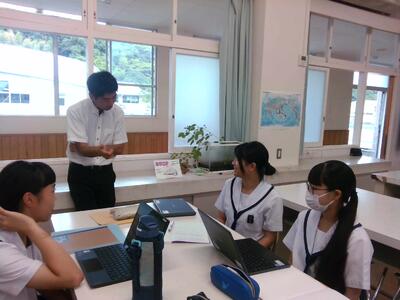
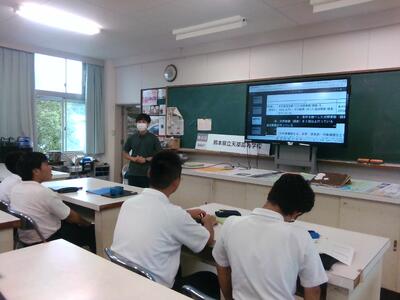
In ASII today, students were first told about their presentation to be held next month; each group is scheduled to make a poster presentation. Then, they checked what they needed to do before the “main evaluation.”
After that three groups went outside for their research: the “Turf” group went out to check the growth status of growing turf and collect leaves, the “Cluster amaryllis” group went to get some flowers for the experiment, and the “Abandoned Land” group went to measure the weed situation. They all looked excited!
【ASⅡ・Ⅲ】質疑応答、始めました♪ / Question and answer session
各部担当者
本日のASⅡでは、授業の冒頭に今回から始める「質疑応答」についての説明がありました。質問形式(オープンクエスチョン?クローズドクエスチョン?)に応じて簡潔に答える(=まず結論を述べ、必要に応じて補足する)こと、想定外の質問で答えられない場合にはどうするか、など、具体例を用いて質疑応答の流れを押さえました。
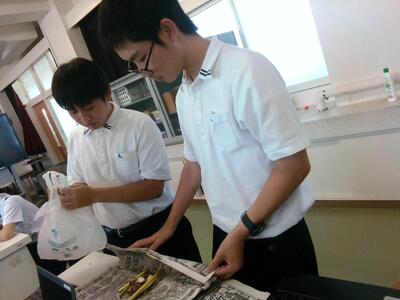
その後は、各班の活動場所に分かれての研究活動です。天気にも恵まれ、屋外で活動したり、実験を始める班も少しずつ増えてきました。急に秋めいてきて、天草のあちこちで彼岸花が見頃を迎えています。ということで、今日はASⅡの「ヒガンバナ班の実験におじゃましてみました。2人のメンバーはヒガンバナの持つ毒性を除草に活用するという研究をしているのですが、今日は特に強い毒を持つ球根の部分をつぶしてリコリンが含まれる液を抽出しようとしています。聞いてみると、抽出液は取れたものの、思ったより球根の粘度が高かったので少し苦戦したとのこと。次回は水をもう少し加えつつ抽出を試みるそうです。
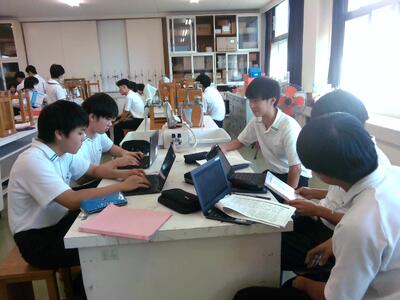
7時間目から活動を始めた3年生はというと、時にディスカッションをしつつ、クロームブックとにらめっこ。論文作成を頑張っています。いよいよ締め切りが今月末に迫ってきて、みんな必死な様子です。研究の総まとめとなる論文、良いものができるといいですね!
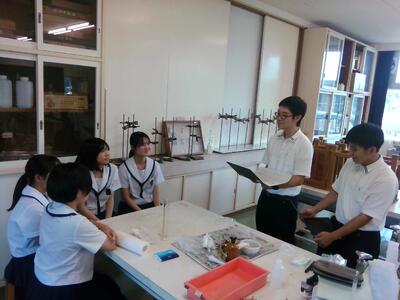
授業の最後に、いよいよ「質疑応答」の時間がやってきました。今回は2年生が2分間で研究内容を説明し、その後の3分間で3年生からの質問に答えます。最後に、その場で答えられた質問とその回答をワークシートに書き込みます。答えられなかった質問には、それに対する回答を後日調べて記録することで、今後の研究につなげることができます。初日の今日は、どの班も少し緊張した面持ちながら、一生懸命説明や質疑応答を頑張っていました。継続は力なり! 来週も引き続き、研究&質疑応答を頑張っていきましょう♪
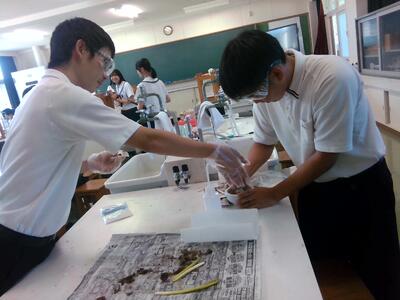
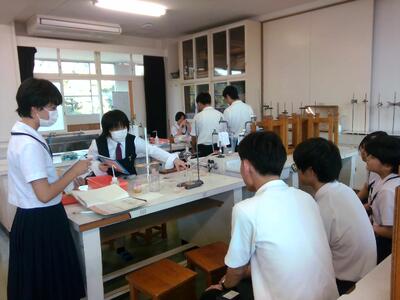
Autumn has come and flowers called Cluster amaryllis are at their best here and there in Amakusa. In ASⅡ, a group called ”Cluster amaryllis” has been working on utilizing the toxicity of the flower for weed control, and today they are trying to extract a liquid containing lycorine by crushing a particularly poisonous bulb. They told us that they struggled a bit in extracting liquid because the viscosity of the bulb was higher than they expected. Next time, they will try to extract while adding a little more water.
The third-year students, who began their activities in the seventh period, were all writing papers with their chromebooks. The deadline is coming up at the end of this month, and everyone is working really hard. We hope they can produce a good paper that summarizes their research!
At the end of class, the second-year students began a new “question and answer” activity. This time, they will have two minutes to explain their research, followed by three minutes to answer questions from the third graders. At the end of the session, they write down the questions and their answers on a worksheet. For questions that were not answered, the answers to them will be researched and written down later for future research. Today, the first day, all the groups looked a little nervous, but tried their best to explain and answer questions. Question and answer sessions are not so easy, but never give up, great things take time!
【ASⅡ】第2グラウンドへ出動! / Research under the beautiful autumn sky!
各部担当者
本日のASⅡは、2・3学期に行われる外部発表会に関する説明から始まりました。テーマを決め、研究計画を立ててはいるものの、まだ実験を行っていない班も多く、発表会までにどこまで研究を進める必要があるのか、発表会で何をどのように発表するのかがまだ具体的にイメージできない生徒も多いようです。
しかし、十分なデータが揃い、仮説の検証が終わらなければ研究発表ができないというわけではありません。まだあまり研究が進んでいない今の段階だからこそ、発表会を単に発表の機会ととらえるのではなく、他校の研究から学んだり、外部の専門家に意見をもらったりして、自分たちの研究を発展させていく手段にする、というのも有効な活用法の1つとなるはずです。多くの班の積極的な参加を期待しています。
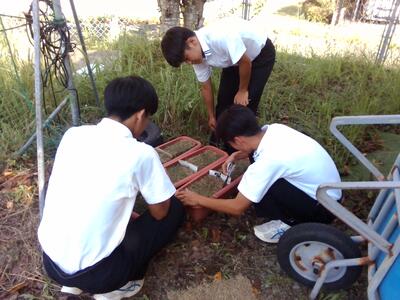
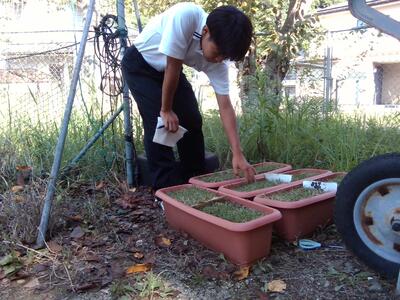
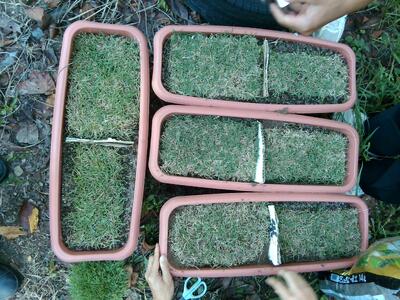
さて、秋晴れの今日、水はけ(芝)班は、本校第2グラウンドで活動を行いました。この班は、夏芝の上に冬芝を植え、年中枯れない芝を育てる方法についての実験を行っています。現在は、夏芝の育成中で、10月に冬芝を種類や植えるタイミングを変えて種まきして観察するそうです。今回は、冬芝を植える前の夏芝ができるだけ同じように育つようにメンテナンスを行っていました。
読書の秋、スポーツの秋、そして研究の秋! ASⅡの様々な研究が今後どう発展していくのか、楽しみです!!
Today's class began with an explanation about the external presentations contests to be held in the 2nd and 3rd semesters. Although everyone in AS II has decided on a theme and made a research plan, there are many groups that have not yet conducted experiments. So, it is natural that many students are still wondering how far they need to advance their research before the presentation and what and how they will present it at the presentation.
However, it is not true that they cannot present their research until they have enough data and have finished verifying their hypotheses. Making presentations could also be a means to improve their research by learning from others and receiving opinions from experts. We hope many will make use of those opportunities!
Today, the "Turf” group went outside for their research. They have been conducting an experiment on how to plant winter turf on top of summer turf, and grow turf that does not die all year round. This time, they were maintaining the summer turf before planting the winter turf.
Autumn is the season for reading, sports, and research! We look forward to seeing how students' various research projects will develop in the future!

【ATⅠ】「発熱した!」 / A Fever!
各部担当者
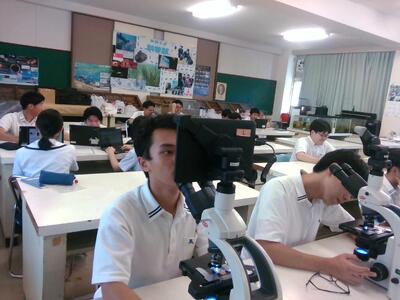
終礼も終わり、職員室でほっと一息ついた私(SSH研究部員)のもとにかかってきた一本の内線電話。受話器を取ると、開口一番、聞こえてきた言葉は「先生、発熱しました!」 発熱? インフルエンザ? 意味が分かるまでに3秒かかりましたが、結論から言うと、発熱したのは生徒ではなく、なんと「貝殻」でした。
この貝殻(ちなみにシジミです)、もちろん、「世界津波の日」高校生サミットに参加予定の2年生「貝殻班」のもの。話を聞くと、先日の実験(失敗)を受け、今日もあきらめずに地学室で実験をしたものの、今日も発熱せず。がっかりしつつも、片付けをしていたところ、貝殻を入れた容器がほんのり温かいような... そう! 「貝殻+水」が反応して発熱するまでには、時間が必要だったのです!!
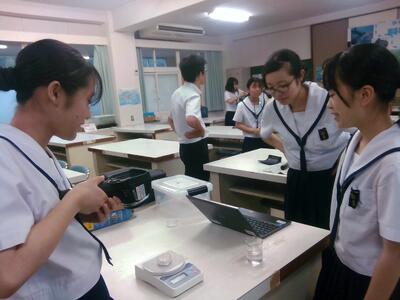
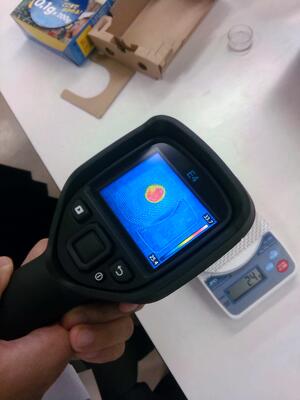
「発熱」に大盛り上がりの地学室では、貝殻班の3人が赤外線サーモグラフィカメラを使って発熱の様子と温度を記録しています。温度は31℃から32℃、33℃、1秒に1度くらいの速度でどんどん上昇しています。ついに40℃を越えました! さて、何℃までいけるのでしょうか?
「失敗は成功の母」ー誰もが知っていることわざですが、今日の実験に成功して大喜びする生徒たちを見て、こちらまで嬉しくなった出来事でした。
After the closing assembly, when I (a teacher) was having a cup of tea in the teachers’ room, there was a sudden phone call, saying “We have a fever!” - Who’s got a fever? Flu? It took me a while to figure out what it meant, but as it turned out, it was not a student who had a fever, but a “shell.
The shells belonged to the “shell group” which will participate in the “World Tsunami Day” high school students' summit in Oct. The students told me that, after their failed experiment the other day, they had another try today, but again no heat had been generated. Disappointed, they were cleaning up when they noticed that the container in which they had placed the shells seemed to be slightly warm... Yes! It took some time for the “shells + water” to react and generate heat!
In the Earth Science Lab, three members of the group were excitedly recording the heat generation and temperature using an infrared thermography camera. The temperature was rising rapidly from 31°, 32°, and 33°C, at a rate of about one degree per second. Finally, the temperature exceeded 40°C! Now, how high can it go?
”Failure is the mother of success” - everyone knows this proverb, but seeing the students overjoyed by the success of today's experiment was an event that made us happy as well.
【ATⅠ】 貝殻班の実験 / Perfect Day for Experiments
各部担当者
土曜日、地学室に何か気配がする...! と覗いてみると、そこにいたのは、ATⅠ「貝殻」班の2名でした。
この「貝殻」班の2年生は、10月下旬に行われる「世界津波の日」高校生サミットに参加予定の3班のうちの1つで、貝殻を使って熱を発生させる研究をしています。夏休みは思うように研究が進んでいない様子で少し心配していたのですが、ちゃーんと、地道に頑張っていたのですね。さすがです!
今日、彼女たちが何をするかというと、天草の特産品でカラフルな色が目を引く「緋扇貝(ヒオウギ貝)」を粉砕したものを、地学室にある電気炉で焼くのだそうです。それも、1,000度という高温で! 初めて「電気炉」なるものを見ましたが、意外とコンパクト&ちょっとレトロな色使いのかわいい仕様。これがそんなに熱くなるんでしょうか?想像もつきません。
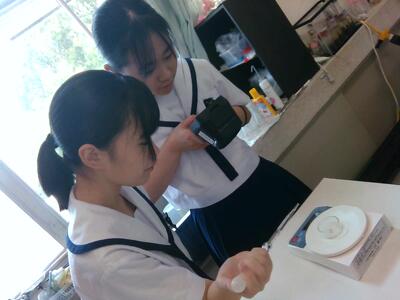
さて、緋扇貝を焼いている間に、実験に入ります。実は、焼いた貝に水を加えてどれくらい発熱するかを実験するのは、今回が初めて。(ちなみに、今日使う貝は「シジミ」だそうです)実験道具の選定に始まり、水と貝殻の割合はどうするのか、水を加える方法はどうするのか... 科学部の宮﨑先生ともディスカッションをしながら、最適な実験方法を考えていく生徒たち。そして、いよいよ水を加えます! すると...???
この実験結果はこれからスライドにまとめ、10月のサミットで発表予定となっています(もちろん英語!)。まだまだやることが沢山ですが、持ち前のガッツと笑顔で頑張ってくれることでしょう。貝殻班、ファイトです!
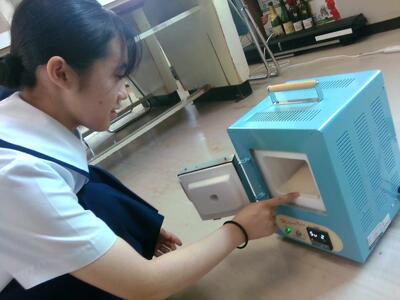
Today we’ll introduce you to the “Seashell” group! They are one of the groups which are going to join the High School Students Summit on “World Tsunami Awareness Day” 2024 in Kumamoto. Today, they are baking the crushed shells as preparation for their experiments. With the tiny electric furnace in the Earth Science room, can we heat it to 1,000 degrees Celsius?
While baking, they get to the experiment. Actually, this is their very first time to experiment how much heat is generated by adding water to baked shellfish. Starting with the selection of tools for the experiment, what proportion of water and shells to use, how to add water.... The students discussed with their teacher and came up with the best way to conduct the experiment. Now they are finally adding some water - what would be happening?
The results of this experiment will be presented in English at the summit in October. There is still a lot of work to be done, but we are sure that the students can make it!